
Strengthening Clinical Decision-Making at First Contact
A supervised model that helps primary care clinicians make clearer, safer skin lesion decisions within everyday practice.
Is this programme for you?
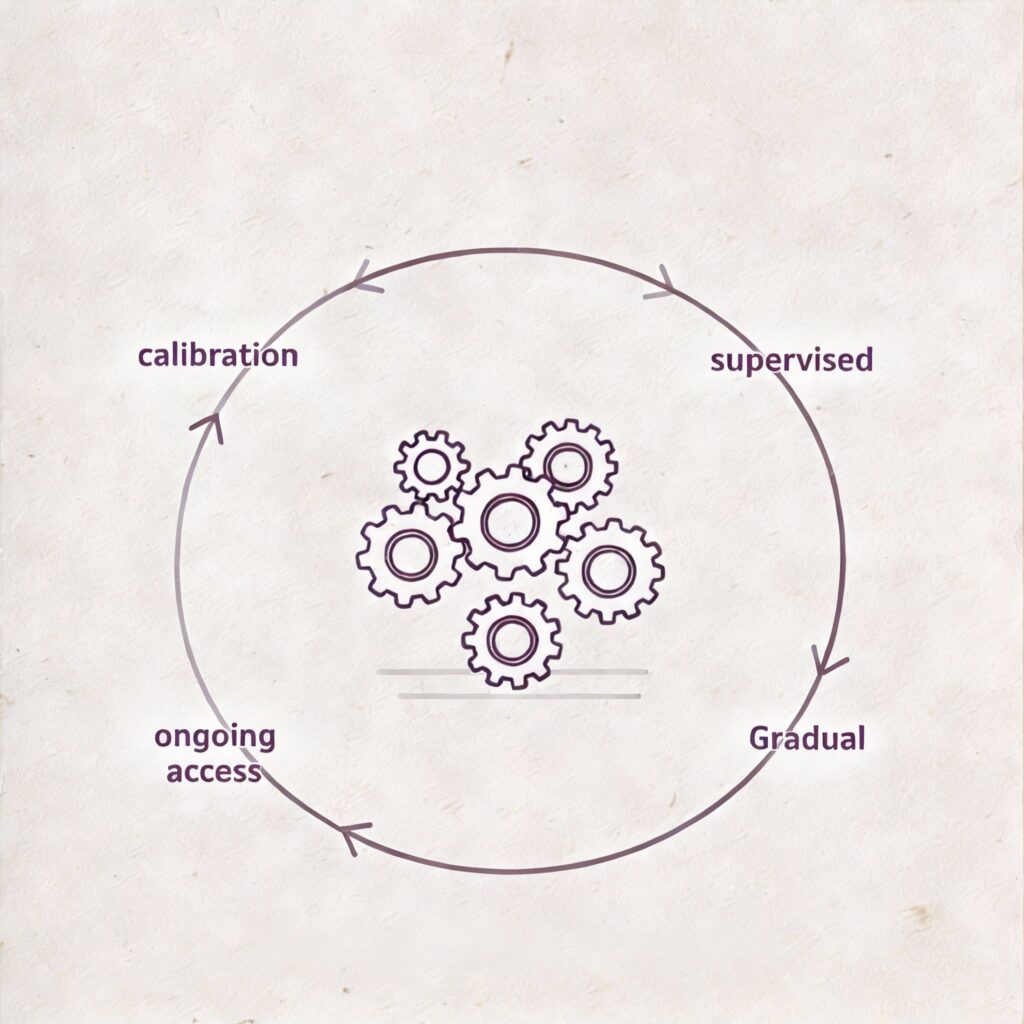
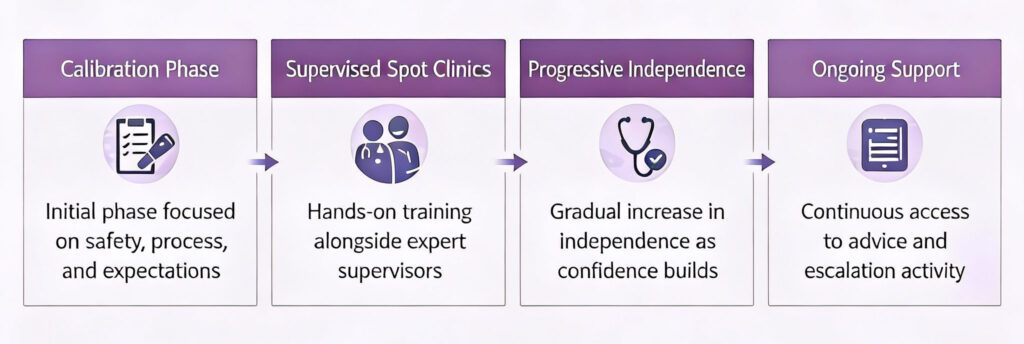
You begin with a calibration phase focused on safety, workflow, and expectations. You work alongside supervisors in supported spot clinics. Gradually, as patterns become familiar, independence increases. Throughout, advice and supervision remain available. If in doubt, referral remains the correct and supported decision.
2-minute Overview
What DermCAP is — and what it isn’t
What it is:
- A structured 13-month supported model
- Embedded in real general practice
- Supervised and safety-focused
- Designed to improve referral quality at first contact
What it isn’t:
- A one-off dermoscopy course
- A teledermatology service
- Pressure to manage risk beyond your comfort
- Confidence without support
Why Knowledge Alone Is Not Enough
- Primary care clinicians see most skin lesions, yet few have had the chance to build experience with dermoscopy in a supervised way
- Even when you know the theory, applying it in a live consultation can feel uncertain.
- Reading about cycling is not the same as riding a bike.
- You can understand the guidance.
- You can recognise the patterns on paper.
- But the first time you rely on it in clinic, it can feel unstable.
- What makes the difference is someone alongside you at the start — steadying things, helping you spot hazards, building confidence through real practice.
- DermCAP provides that structured support inside your own practice
- You remain fully responsible for your patients at all times.
- We are not a teledermatology service and we do not provide diagnostic answers.
Our role is to support you as you develop judgement and confidence safely.
What you will actually be asked to do
Participation is practical and clearly defined.
1. Calibration Month
The programme begins with a one-month calibration phase.
During this month you will:
- Run 2 supervised spot clinics of around 10 patients each
- Work within clear safety and escalation guidance
- Use simple reflection logs to review your decisions
- Record agreed minimum data for feedback and audit
- Take dermoscopy images to agreed standards
- Access case discussion and support via secure NHS platforms (e.g. Pando)
- Complete short Thinkific video modules covering practical dermoscopy skills and common lesion patterns
- Receive direct feedback on your referral decisions
These clinics take place in agreed protected sessions and use existing lesion demand within your practice. The aim is not speed. It is to establish safe habits, clear thresholds, and confidence in using dermoscopy appropriately.
2. STOP / GO Review
At the end of the calibration month, a structured review takes place. This is a formal STOP / GO point.
To progress to the 12-month model, you must demonstrate:
- Safe use of escalation and referral
- Sensible referral decisions
- Engagement with supervision and reflection
- Basic documentation standards
If those standards are not met, the programme does not continue. Patient safety comes first
3. The 12-Month Supported Model
If calibration is successful, you move into a supported 12-month phase. Across the year you will typically see around 200+ lesions within supported clinics and routine practice
This phase includes:
- Ongoing supported lesion assessment
- Review of selected cases
- Feedback on referral patterns
- Clear guidance on when to escalate
- Continued access to advice if you are unsure
- Short reinforcement learning modules
Independence grows gradually. If you are unsure, referral is always supported.
How participation works (high level)
You begin with a calibration phase focused on safety, workflow, and expectations. You work alongside supervisors in supported spot clinics. Gradually, as patterns become familiar, independence increases. Throughout, advice and supervision remain available. If in doubt, referral remains the correct and supported decision.
Supervision, support, and safety
DermCAP is designed to improve decisions without increasing risk. Escalation routes are clear at every stage.
You remain the treating clinician at all times. Nothing in the programme replaces your clinical responsibility
Time commitment
The calibration month requires protected clinic time. After this, supported lesion assessment fits into normal clinical workflow. Most learning happens in real consultations rather than separate study time. Time expectations are agreed before enrolment.
Access and commissioning
DermCAP is usually commissioned at system level. Clinicians or practices can register interest and we will advise on local options. Participation takes place within agreed governance arrangements.
Next Steps
If this would benefit your practice, you can register interest or request further information