
Improving Decision Quality at First Contact in Primary Care
A governance-led intervention that improves referral quality, reduces avoidable downstream demand, and protects patient safety.
The problem DermCAP addresses
Primary care manages the majority of skin lesion presentations, yet referral thresholds and diagnostic confidence vary widely. This variability drives defensive referrals, inconsistent referral quality, clinician anxiety, and avoidable downstream demand. DermCAP addresses this by improving the quality and consistency of first-contact clinical decisions — safely and measurably.
2-minute Overview
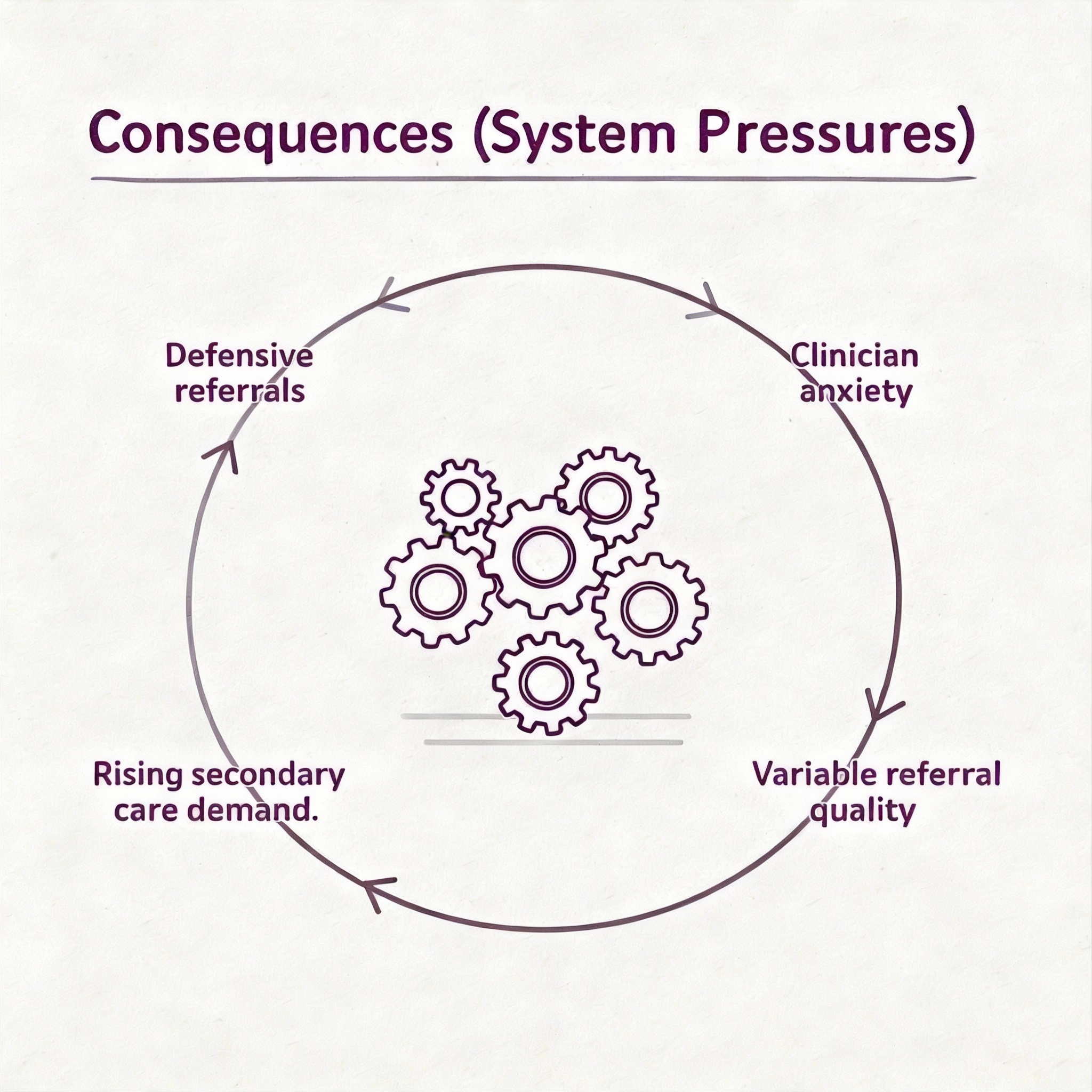
precautionary referrals and pathway inefficiency.
What DermCAP does differently
DermCAP is a 13-month, governance-led behavioural intervention embedded within primary care practice. It
improves clinical decision quality through structured supervision, calibration, and defined safety thresholds —
rather than relying on short-course education alone.
What commissioners commission — and how practices implement the intervention
Commissioned Elements
- Governance framework and clinical oversight
- Structured decision-calibration model
- Safety monitoring and escalation thresholds
- Quality assurance and reporting
- Measured pathway impact data
Practice-delivered Elements
- Protected time for supervised decision review
- Participation in audit and behavioural calibration
- Integration into existing lesion assessment workflow
Governance and patient safety
Patient safety is the organising principle of DermCAP. The intervention operates within explicit inclusion criteria, defined escalation thresholds, structured supervision, and an “if in doubt, refer” safety policy. Decision quality improves without increasing clinical risk.
Measurement, oversight, and reporting
DermCAP generates commissioner-relevant data focused on decision quality and pathway impact, including participation metrics, referral behaviour trends, safety escalation activity, and image quality standards where applicable.
→ Participation
Clinician engagement and progression through the programme
→ Referral patterns
Referral behaviour trends where data is available
→ Image quality
Adherence to agreed image quality standards
→ Safety escalation
Monitoring and reporting of safety and escalation activity
Why this model is sustainable
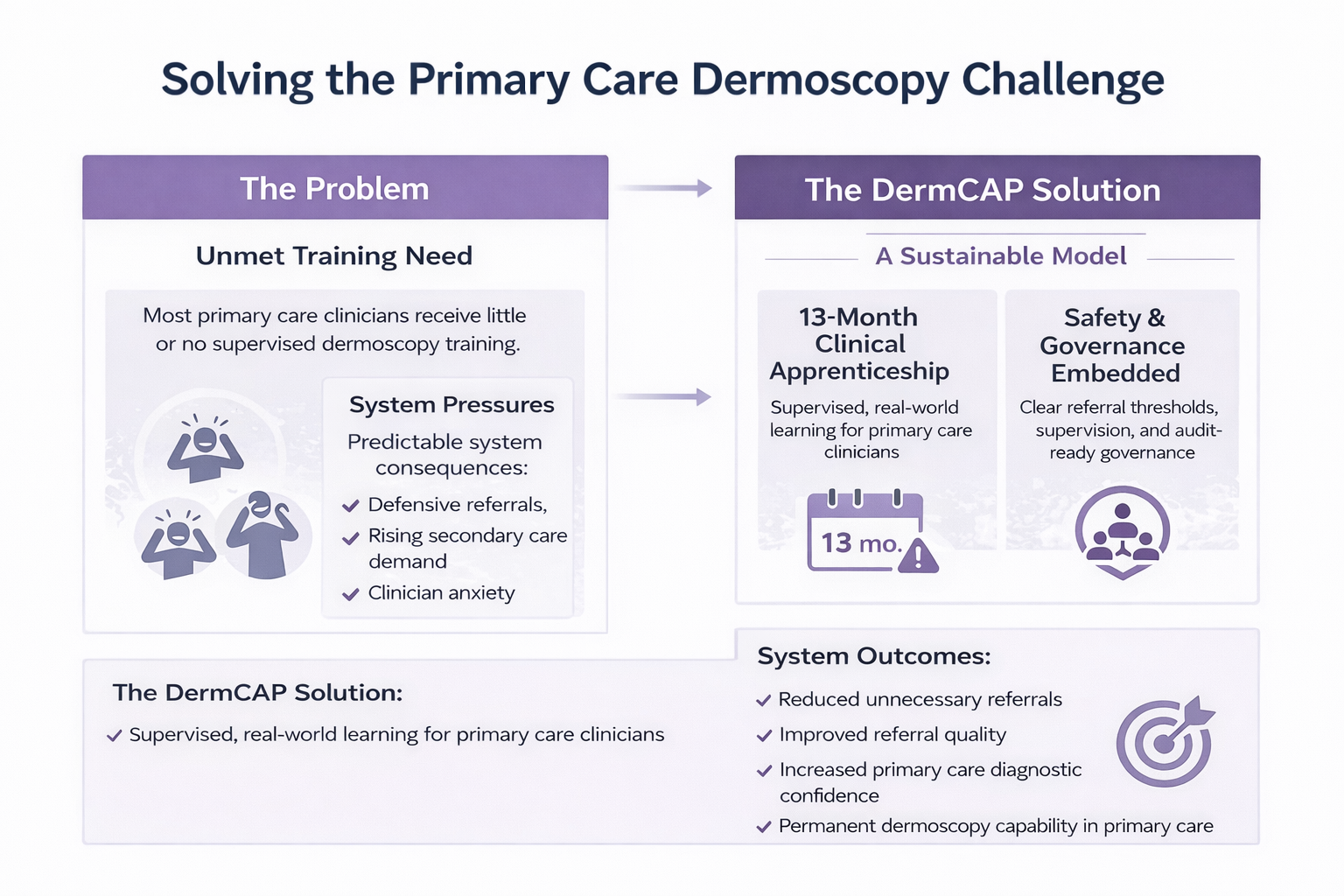
Unlike short courses, DermCAP creates permanent upstream capability.
Once trained, clinicians retain core diagnostic skill year after year, local expertise remains embedded within practices, and system value accrues beyond the initial programme period.
While the core apprenticeship is delivered over 13 months, some systems choose to commission optional follow-on years focused on maintaining capability, governance, and assurance as services mature. This approach helps protect against skill fade and preserves the original return on investment over time.
Next Steps
If improving decision quality at first contact aligns with local priorities, we are happy to share a detailed commissioning proposal, discuss pilot implementation, and explore alignment with existing dermatology pathways.